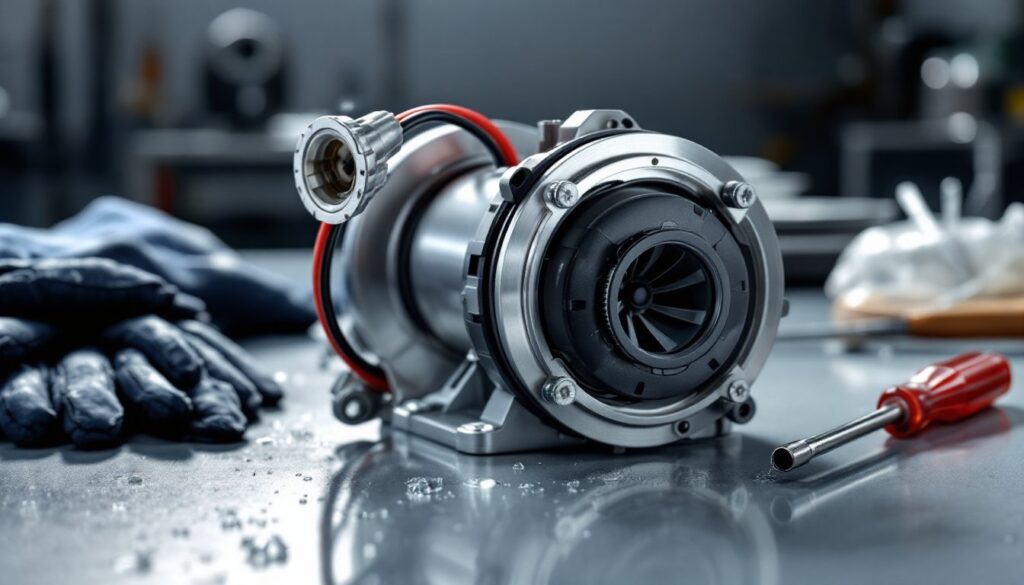
When a dishwasher refuses to drain or makes grinding noises mid-cycle, the pump is often the culprit. This workhorse component moves thousands of gallons through the appliance each year, handling everything from soapy wash water to food debris. Understanding how the pump functions, and recognizing early warning signs of failure, can save hundreds in service calls and extend the life of the dishwasher. This guide walks through pump anatomy, common failure modes, diagnostic steps, cleaning procedures, and replacement instructions. Whether troubleshooting a noisy motor or tackling a full pump swap, homeowners will find practical steps to restore proper drainage and performance.
Table of Contents
ToggleKey Takeaways
- A dishwasher pump with two chambers—circulation and drain—moves water under 20–60 psi pressure; understanding failure modes helps distinguish between mechanical and electrical problems.
- Most dishwasher pump issues like standing water, grinding noises, or leaks can be diagnosed by checking for clogs, spinning the impeller by hand, and testing voltage with a multimeter.
- Regular dishwasher pump cleaning every 3–6 months, including filter removal and inspection for debris, prevents costly repairs and extends the appliance’s lifespan.
- Replacing a dishwasher pump is a moderate DIY repair achievable in 1–3 hours if the unit is modular and accessible; verify part compatibility and torque fasteners to 15–25 in-lb to prevent leaks.
- Call a professional if the dishwasher is under warranty, hardwired into junction boxes, or if multiple components have failed, as these situations require licensed expertise.
What Is a Dishwasher Pump and How Does It Work?
A dishwasher pump is a motorized assembly that circulates water during the wash and rinse cycles, then expels it through the drain hose. Most modern units use a dual-function pump with two chambers: the circulation pump that pushes water through the spray arms under pressure (typically 20–60 psi), and the drain pump that evacuates dirty water after each cycle.
The circulation pump pulls water from the sump, a reservoir at the bottom of the tub, through a filter screen. It then forces that water up through the spray-arm manifold. The impeller, a fan-like blade inside the pump housing, spins at several thousand RPM to generate pressure. At the end of a wash stage, a drain solenoid or reversible motor redirects flow to the drain chamber, which pushes wastewater out through a flexible hose into the household drain line.
Pumps operate on standard household voltage (120 V AC in the U.S.) and draw between 5 and 15 amps depending on the model. The motor is sealed against moisture, but bearing seals and gaskets degrade over time, especially in hard-water environments. Understanding these components helps pinpoint whether a failure is mechanical (bearing wear, broken impeller) or electrical (burned-out motor windings, failed capacitor).
Types of Dishwasher Pumps
Single-pump (reversible-motor) systems use one motor that spins in opposite directions. During wash cycles, the motor turns one way to circulate: during drain cycles, it reverses to expel water. These are common in mid-range dishwashers and rely on a start capacitor and relay to switch direction.
Dual-pump (separate motors) systems feature independent circulation and drain motors. The drain pump is typically smaller and runs only during drain phases, while the larger circulation pump handles spray pressure. This design is found in higher-end models and allows simultaneous or staged operation, improving cycle efficiency.
Hardwired vs. modular pumps: Some units bolt directly to the sump with a gasket and O-ring seal, requiring disassembly from below. Others use a twist-lock or quick-release mount that simplifies replacement. Check the dishwasher’s service manual or model number on the manufacturer’s parts portal to confirm pump type before ordering a replacement. Pumps are not universal: impeller diameter, voltage, and mounting flange vary by brand.
Grinder pumps include a chopper blade or macerator that pulverizes food particles before draining. If the dishwasher lacks a self-cleaning filter, a grinder pump reduces clogs in the drain hose. These are noisier than standard pumps and require periodic inspection of the blade.
Common Dishwasher Pump Problems and How to Diagnose Them
Dishwasher won’t drain: Standing water in the tub after a cycle usually means the drain pump isn’t running or the impeller is jammed. First, check the drain hose for kinks or clogs. Remove the lower spray arm and filter basket to inspect the sump for debris, plastic labels, toothpicks, and broken glass are frequent offenders.
Turn off power at the breaker. Use a flashlight to look into the pump inlet: spin the impeller by hand (wear gloves). It should rotate freely with slight resistance. If it’s locked up, remove the obstruction. If the impeller spins but the pump still won’t drain, test for voltage at the pump terminals with a multimeter set to AC volts. No voltage indicates a control-board or wiring issue: voltage present with no pump action points to a failed motor.
Grinding or humming noise: A loud hum without water movement suggests a seized bearing or broken impeller fin. Grinding sounds often come from hard objects caught between the impeller and housing. Remove the pump assembly to inspect. Bearings that feel gritty or show rust need replacement, many pumps are sealed units, so bearing failure means swapping the entire pump.
Leaking from the pump: Water pooling under the dishwasher, especially after the drain cycle, usually traces to a worn pump seal or cracked housing. Inspect the rubber gasket where the pump mounts to the sump: it should be pliable, not brittle. Tighten mounting screws to 15–20 in-lb torque (if accessible) and recheck. Persistent leaks require a new seal kit or pump.
Weak spray pressure: If the circulation pump runs but spray arms barely turn, the impeller may be worn or the pump inlet clogged. Clean the filter and check the spray-arm nozzles for mineral deposits. Low voltage at the pump (below 110 V) can also reduce performance, confirm supply voltage at the junction box.
Step-by-Step Guide to Cleaning Your Dishwasher Pump
Regular pump cleaning prevents clogs and extends service life. Most manufacturers recommend inspection every 3–6 months, or sooner if the household uses the dishwasher daily.
Tools & Materials
- Screwdrivers (Phillips and flat-head)
- Needle-nose pliers
- Small bowl or pan
- Flashlight
- Soft brush or toothbrush
- White vinegar (optional for mineral buildup)
Steps
- Disconnect power: Flip the breaker or unplug the unit. If the dishwasher is hardwired, confirm power is off with a non-contact voltage tester.
- Remove lower rack and spray arm: Lift out the bottom dish rack. Unscrew or twist-lock the lower spray arm counterclockwise to detach.
- Take out the filter assembly: Most filters consist of a cylindrical mesh screen and a flat screen. Turn the cylinder counterclockwise and lift. Rinse both parts under running water to remove food particles.
- Access the pump inlet: With the filter removed, you’ll see the sump opening. Use the flashlight to inspect for debris. Remove any visible objects with needle-nose pliers.
- Spin the impeller: Reach into the sump (wear gloves) and rotate the impeller fins by hand. They should move freely. If you feel resistance or hear grinding, remove the pump for deeper cleaning.
- Clean mineral deposits: If hard-water scale coats the sump or impeller, pour 1–2 cups of white vinegar into the tub and run a short rinse cycle (no dishes). The acidity dissolves calcium buildup.
- Reassemble: Replace the filter, spray arm, and rack. Restore power and run a test cycle.
If the impeller won’t spin or the pump still sounds rough after cleaning, proceed to replacement.
How to Replace a Dishwasher Pump (DIY Instructions)
Replacing a dishwasher pump is a moderate-skill repair. Expect to spend 1–3 hours depending on access and whether the dishwasher must be pulled out.
Tools & Materials
- Replacement pump (verify model compatibility)
- Screwdrivers (Phillips, flat-head, possibly Torx)
- Adjustable wrench or socket set
- Towels or shallow pan
- Work gloves and safety glasses
- Multimeter (for testing)
- Headlamp or flashlight
Steps
- Turn off power and water: Flip the breaker. Close the shutoff valve under the sink if the dishwasher has a dedicated supply line. If it taps the sink tailpiece, place a pan under the connection before loosening.
- Pull the dishwasher forward: Remove the screws securing the unit to the underside of the countertop (usually two at the top corners). Slide the dishwasher out gently, keeping tension off the drain hose and supply line. Disconnect the drain hose from the garbage disposal or sink tailpiece.
- Access the pump from below: Lay a towel under the unit. Tip it slightly or work from underneath. The pump is typically mounted to the center of the sump with three to six screws or bolts.
- Disconnect electrical leads: Photograph or label the wire terminals before removing. Most pumps use spade connectors that pull straight off. If wires are spliced, cut them and prepare to use wire nuts for reinstallation.
- Remove the old pump: Unscrew the mounting fasteners. Twist the pump counterclockwise if it uses a bayonet lock, or lift straight down if bolt-mounted. Expect a small amount of water to spill, have the pan ready.
- Install the new pump: Clean the sump mounting surface and replace the rubber gasket (included with most replacement pumps). Align the pump inlet with the sump opening. Secure with bolts or twist-lock. Torque screws to 15–25 in-lb if using a torque screwdriver.
- Reconnect wiring: Match wire colors or refer to your photo. Push spade connectors firmly onto terminals. If using wire nuts, strip ½ inch of insulation and twist clockwise until tight.
- Reattach drain hose: Slide the hose clamp over the pump outlet and tighten with a screwdriver. Ensure the hose has a high loop (rising to the underside of the countertop) to prevent backflow.
- Test before securing: Slide the dishwasher partway in, restore power and water, and run a short rinse cycle. Check for leaks around the pump and hose connections. Listen for normal operation.
- Secure and clean up: If all is well, push the unit back, reattach the mounting screws, and reconnect the drain hose to the disposal or sink.
Dishwasher manufacturers publish service manuals online, search “[brand] [model number] service manual PDF” for exploded-view diagrams and torque specs.
When to Call a Professional vs. DIY Repair
DIY is feasible when the homeowner is comfortable working with basic electrical connections, can access the pump without extensive disassembly, and has verified the replacement part number. Cleaning a clogged pump or swapping a modular unit are straightforward jobs for someone with moderate mechanical skills.
Call a professional if:
- The dishwasher is still under warranty (DIY repairs often void coverage).
- The unit is built-in with custom cabinetry or stone countertops that complicate removal.
- Wiring is hardwired into a junction box and local code requires a licensed electrician for modifications.
- Multiple components have failed (control board, pump, and heating element), suggesting a deeper electrical issue.
- The pump is part of an integrated motor/sump assembly that requires specialized tools or soldering.
Many service calls for pump replacement fall in the range mentioned by major cost estimators, but pricing varies by region and labor rates. If the dishwasher is more than ten years old and requires a $200+ repair, weigh the cost against a new energy-efficient model. Modern units use as little as 3 gallons per cycle compared to 10+ gallons in older machines, offering long-term utility savings.
For homeowners unsure about diagnosis, many home improvement platforms offer virtual consultations or can match you with local appliance techs for in-person assessment. Similarly, DIY repair guides provide video walkthroughs and troubleshooting flowcharts that clarify whether a project is within reach.
Conclusion
A failing dishwasher pump doesn’t automatically mean appliance replacement. With proper diagnosis, many pump issues, clogs, worn seals, or jammed impellers, are repairable in an afternoon. Regular filter cleaning and cautious loading (no large debris, no plastic labels) extend pump life. For homeowners ready to tackle the repair, following torque specs, testing connections, and verifying part compatibility ensure a successful outcome. When in doubt, consult the service manual or bring in a pro for complex wiring or warranty work.