Country kitchen cabinets bring a warm, lived-in aesthetic that never goes out of style. They’re the foundation of kitchens that feel like the heart of a home, functional, inviting, and built to last. Whether someone’s renovating an older house or adding character to a new build, country cabinets offer flexibility in style, material, and finish. This guide walks through what defines country cabinets, the most popular styles, material choices, selection criteria, and DIY makeover strategies that can transform a kitchen without a full gut job.
Table of Contents
ToggleKey Takeaways
- Country kitchen cabinets emphasize natural materials, raised panels, and rustic finishes that blend function with timeless charm, making them ideal for farmhouses, cottages, and any home needing character.
- Farmhouse and cottage styles are the two most popular country cabinet approaches, with farmhouse favoring bold, distressed finishes and open shelving, while cottage style opts for lighter colors and delicate detailing suited to smaller spaces.
- Solid hardwoods like oak and maple, paired with plywood boxes and solid face frames, offer the best balance of durability, stability, and authenticity for country kitchen cabinets.
- Painting, hardware swaps, glass inserts, and open shelving are cost-effective DIY makeover strategies that can transform existing country kitchen cabinets without full replacement.
- Door style, ceiling height, and layout directly impact how well country cabinets complement your kitchen’s architecture and workflow, so plan these elements before selection or renovation.
What Are Country Kitchen Cabinets?
Country kitchen cabinets emphasize natural materials, unfussy construction, and a sense of history. Unlike sleek contemporary designs with flat-panel doors and minimal hardware, country cabinets often feature raised panels, beadboard inserts, or simple Shaker-style frames. Finishes lean toward wood tones, natural oak, knotty pine, or painted whites and soft pastels, rather than high-gloss laminates or metal.
These cabinets prioritize function and durability. Open shelving, glass-front doors, and plate racks are common, making everyday dishes part of the decor. Hardware tends toward oil-rubbed bronze, antique brass, or ceramic knobs that reinforce the handcrafted look.
Country cabinets work in a range of home styles, from authentic 19th-century farmhouses to suburban ranches that need more personality. The key is balancing rustic elements with modern conveniences, soft-close hinges, full-extension drawer slides, and adequate storage, so the kitchen doesn’t just look charming but works hard every day.
Popular Styles of Country Kitchen Cabinets
Country cabinets aren’t a single look. Regional influences, personal taste, and architectural context all shape the final style. Two of the most enduring approaches are farmhouse and cottage.
Farmhouse Country Cabinets
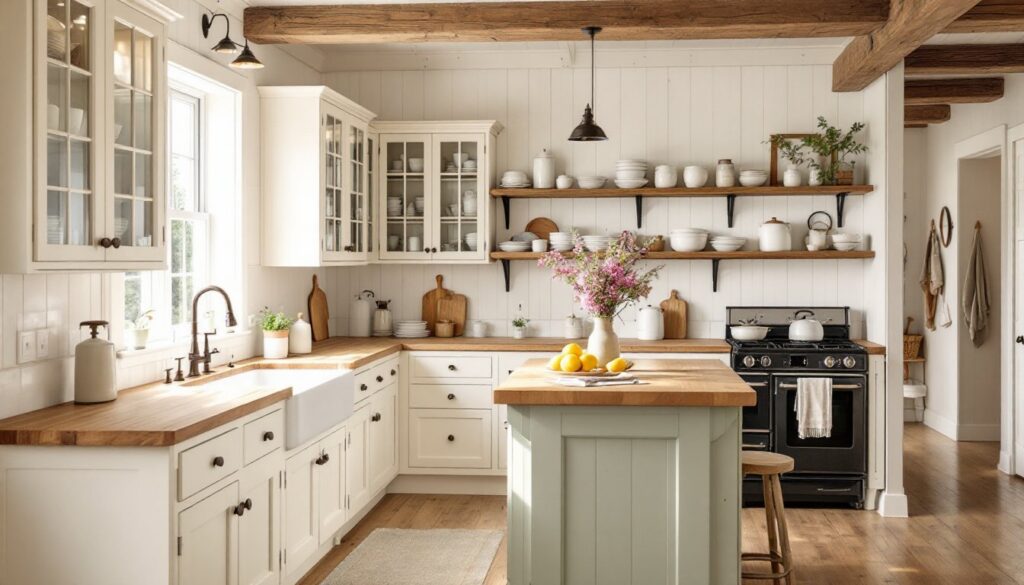
Farmhouse cabinets are robust and utilitarian, rooted in agricultural tradition. Expect thicker door frames, reclaimed or distressed wood, and finishes that show age, whether genuine or carefully applied. Colors range from natural wood stains to chalky whites, barn reds, and muted greens.
Open shelving often replaces upper cabinets on at least one wall, displaying crockery, cutting boards, or vintage jars. Deep farmhouse sinks pair naturally with this style, and many designs integrate apron-front sink bases with matching cabinet face frames. Hardware is hefty: cup pulls, bin pulls, or hand-forged latches that feel like they belong on a barn door.
Farmhouse style suits larger kitchens with room for a central island or a dedicated pantry. It’s less about symmetry and more about layered function, think mismatched upper and lower cabinets or a butcher-block work surface alongside painted base units. Many farmhouse kitchen designs layer textures like wood, metal, and stone to create depth.
Cottage-Style Country Cabinets
Cottage cabinets dial back the scale and roughness. They favor lighter colors, delicate detailing, and a cleaner overall silhouette. Think soft cream, robin’s-egg blue, or buttercream yellow finishes paired with simple beadboard or flat-panel doors. Glass-front uppers often feature mullion details, thin wooden grids that divide panes into smaller sections.
This style fits smaller kitchens or spaces aiming for a cozy, intimate feel. Cottage cabinets work beautifully in bungalows, Cape Cods, or any home where the kitchen opens onto a garden or sunroom. Hardware is more refined: polished nickel, porcelain knobs with floral motifs, or small bin pulls in brushed brass.
Cottage style also embraces vintage or salvaged pieces. A freestanding hutch, a narrow pie safe, or a vintage baker’s rack can supplement built-in cabinetry without clashing. The overall effect is less “working farm” and more “weekend retreat.”
Best Materials and Finishes for Country Kitchen Cabinets
Material choice affects durability, cost, and authenticity. Country cabinets traditionally use solid wood or wood products that can be painted or stained to highlight grain.
Solid hardwoods, oak, maple, cherry, and hickory, offer longevity and can be refinished multiple times. Oak, especially red oak or quarter-sawn white oak, delivers prominent grain that suits rustic finishes. Maple takes paint exceptionally well, making it ideal for clean cottage looks. Knotty pine or alder provide a more casual, textured appearance and cost less than premium hardwoods.
Plywood cabinet boxes with solid wood face frames and doors are a practical middle ground. This construction is lighter, more stable in humid climates, and less prone to warping than all-solid-wood cases. Face frames (the front border around cabinet openings) should still be solid wood for a quality look and sturdy hinge mounting.
MDF (medium-density fiberboard) is often used for painted doors. It’s smooth, doesn’t show grain, and holds paint without the expansion/contraction issues of solid wood. But, MDF is heavier and less forgiving if it gets wet, use it for doors and drawer fronts, not structural components.
Finishes range from natural stains that showcase wood character to distressed paints that mimic decades of wear. Milk paint and chalk-style paints are popular for DIY refinishing because they require minimal prep and produce a matte, vintage finish. For durability, top any painted finish with a clear polyurethane or wax topcoat.
Avoid particle board or thermofoil in country kitchens. They don’t align with the handcrafted aesthetic and can’t be refinished if tastes change or damage occurs. Country style thrives on materials that age gracefully.
How to Choose the Right Country Kitchen Cabinets for Your Home
Start by assessing the kitchen’s architecture and daily demands. Country cabinets should complement existing trim, flooring, and ceiling height, not fight them.
Ceiling height matters. Cabinets that stop a foot below the ceiling read traditional but leave dead storage space. Extending cabinets to the ceiling maximizes storage and suits farmhouse style, where pantry staples and seasonal items get stacked high. In cottage kitchens, shorter uppers with open shelving or plate racks above maintain an airy feel.
Layout and workflow come next. Country kitchens often incorporate a work triangle (sink, stove, refrigerator) but add character with asymmetry, a range flanked by open shelves on one side and closed cabinets on the other, or a large island with seating that doubles as prep space. Plan for deep drawers near the stove for pots and pans, and narrow pull-outs beside the sink for cleaning supplies.
Door style sets the tone. Raised-panel doors feel formal and traditional: flat-panel Shaker doors offer a cleaner take on country style that bridges modern and rustic. Beadboard or board-and-batten doors lean more casual. Mixing styles, Shaker lowers with glass-front uppers, adds visual interest without clutter.
Hardware should match the overall finish. Oil-rubbed bronze suits darker woods and distressed finishes: polished nickel or brass works with painted cabinets. Size matters: chunkier pulls feel farmhouse, smaller knobs read cottage. Buy a few samples and test them on cabinet doors before committing to a dozen.
Finally, budget realistically. Stock cabinets from big-box stores start around $100–$150 per linear foot for basic construction. Semi-custom lines (adjustable sizes, more finish options) run $150–$400 per linear foot. Custom cabinetry, built to exact specs with premium materials, starts at $500+ per linear foot. Plan for countertops, backsplash, and installation labor, cabinet boxes are just part of the total.
If the existing layout works, consider refacing or repainting instead of replacing. This approach preserves cabinet boxes while updating doors, drawer fronts, and hardware at a fraction of new-cabinet cost.
DIY Country Kitchen Cabinet Makeover Ideas
Transforming existing cabinets into country style is one of the most cost-effective kitchen upgrades. With basic tools and patience, homeowners can achieve a custom look without the expense of new cabinetry.
Painting is the most impactful change. Start by removing doors, drawers, and hardware. Clean all surfaces with a TSP (trisodium phosphate) solution or deglosser to remove grease and old finishes, skip this, and paint will peel. Lightly sand with 150-grit paper to create tooth for primer. Apply a bonding primer designed for slick surfaces (oil-based primers work best on glossy old finishes, though water-based options exist for lower VOC). Two thin coats of semi-gloss or satin paint in a country-appropriate color, off-white, sage, or soft gray, follow. Let each coat dry fully (24 hours minimum) before rehanging.
For a distressed finish, paint a base coat, let it cure, then apply a contrasting top coat. Once the top coat dries, sand edges, corners, and high-wear areas with 220-grit paper to reveal the base color. This mimics natural aging. Seal with paste wax or water-based polyurethane.
Hardware swaps are quick and dramatic. Remove old pulls and fill any mismatched screw holes with wood filler, sand smooth, and touch up paint. New hardware may not align with old holes, that’s normal. Drill carefully using a template or jig to keep placement consistent. Upgraded country-style hardware in bronze or brass immediately signals the style shift.
Adding trim or molding increases visual weight and detail. Apply crown molding to the top of upper cabinets, or add a furniture-style base to lower cabinets, essentially a toe-kick cover with decorative feet. Use a miter saw for tight corner joints. Attach with finish nails and wood glue: fill nail holes with putty, sand, and paint.
Glass inserts transform solid doors into display fronts. Remove the center panel (typically held by a thin bead of trim or small brads), cut tempered glass or acrylic to fit, and secure with glazier points or a new trim bead. This works best on flat-panel or Shaker doors.
Open shelving is another option. Remove a run of upper cabinet doors (leave the boxes in place for support), paint or stain the interiors, and add decorative brackets if needed. Display dishes, glassware, or canisters. Keep items tidy, open shelves demand more curation than closed cabinets.
Safety note: Wear safety glasses and a dust mask when sanding or cutting. Work in a ventilated area when priming or painting, and follow manufacturer dry times. If replacing hinges or drawer slides, verify the new hardware fits existing mounting holes or be prepared to drill and fill.
Most makeover projects take a weekend per section of cabinets (uppers or lowers). Patience during prep and curing pays off with a finish that lasts years, not months.