Whether you’re managing a storefront, parking lot, warehouse, or multi-unit property, grime accumulates fast, and when it does, hiring a commercial pressure washing company is often the smartest move. These outfits do more than just blast dirt off concrete: they handle specialty surfaces, manage runoff, and bring equipment most property owners don’t have collecting dust in the garage. But not all pressure washing services are created equal, and choosing the wrong one can mean wasted money, surface damage, or environmental headaches. This guide walks through what commercial pressure washers actually do, why hiring pros makes sense, and how to vet contractors before signing a contract.
Table of Contents
ToggleKey Takeaways
- A commercial pressure washing company uses truck-mounted equipment capable of 2,500–4,000 PSI to efficiently clean parking lots, building facades, and large properties while handling specialty surfaces safely with soft washing and hot water techniques.
- Hiring professional pressure washing services saves significant time and labor—tasks that take days with consumer equipment are completed in hours—while ensuring regulatory compliance with EPA stormwater runoff requirements and reducing liability risks.
- Before hiring a commercial pressure washing company, verify their general liability insurance, workers’ compensation coverage, experience with your property type, and wastewater disposal practices to avoid damage and regulatory fines.
- Professional crews manage the entire process including site assessment, surface preparation, method selection (rotary cleaners for flatwork, soft washing for delicate surfaces), and proper wastewater collection and disposal with before-and-after documentation.
- Commercial pressure washing costs typically range from $0.08–$0.30 per square foot for parking lots or $75–$200 per hour, with additional charges for hot water cleaning, specialty chemical treatments, and wastewater recovery—always compare at least three written quotes for transparent pricing and full scope coverage.
What Does a Commercial Pressure Washing Company Do?
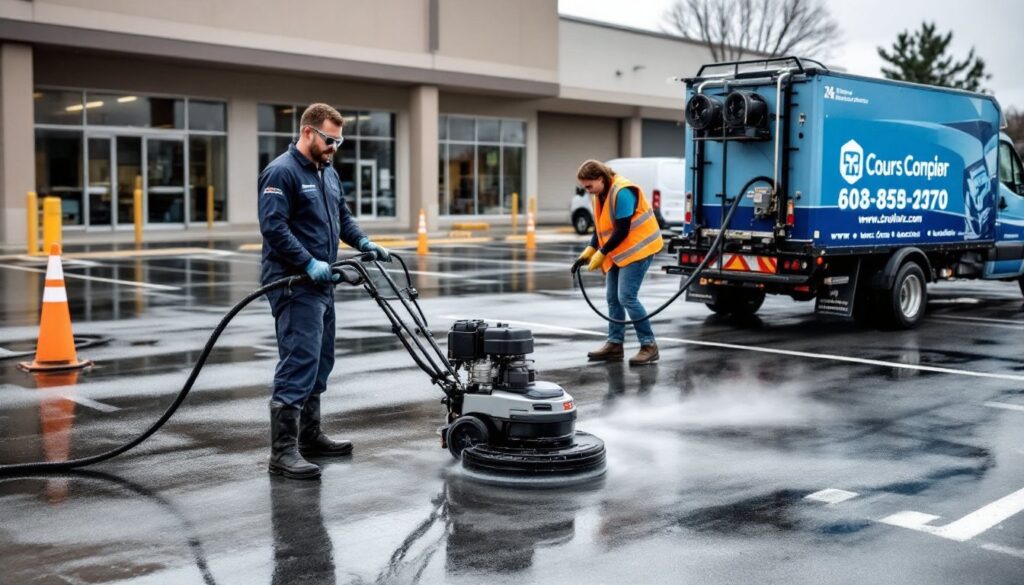
A commercial pressure washing company provides high-pressure water cleaning services for business properties, municipal facilities, and large residential complexes. Unlike residential work, where a homeowner might rent a machine and clean a deck, commercial operators bring truck-mounted or trailer-mounted rigs capable of sustaining 2,500 to 4,000 PSI (pounds per square inch) for extended periods. They clean parking lots, sidewalks, building facades, dumpster pads, loading docks, drive-thrus, and fleet vehicles.
Most commercial outfits offer both pressure washing (cold water, high PSI) and soft washing (low pressure, chemical cleaners). Soft washing is critical for surfaces like stucco, EIFS, painted siding, or roofing, where high pressure can strip coatings or force water under sheathing. Hot water units (steam cleaning) are another tool in the arsenal, useful for degreasing restaurant exhaust hoods, oil-stained concrete, or food processing areas.
They also handle surface preparation before repainting, sealing, or striping. This includes removing efflorescence (white salt deposits on masonry), mildew, algae, gum, graffiti, and oxidation. Commercial crews understand which detergents are safe for different substrates, how to manage wastewater runoff to meet EPA and local stormwater regulations, and when to use rotary surface cleaners for uniform results on large flatwork.
Key Benefits of Hiring a Professional Pressure Washing Service
Time and labor savings top the list. Cleaning a 10,000-square-foot parking lot with a consumer-grade machine could take days: a commercial crew with a 24-inch surface cleaner and hot water rig can knock it out in hours. That’s less downtime for your business and fewer staff hours spent managing the project.
Equipment and expertise matter more than most property owners realize. Pros know the difference between a 15-degree nozzle (for stripping paint or concrete etching) and a 40-degree fan tip (for rinsing siding). They adjust PSI and GPM (gallons per minute) based on surface porosity, age, and contamination level. Using too much pressure on aged brick can erode mortar joints: too little won’t remove embedded stains. Property managers looking for reliable contractor matching services can often compare credentials and customer reviews before committing to a hire.
Regulatory compliance is another big reason to hire out. Many municipalities prohibit untreated wastewater, laden with oils, heavy metals, and cleaning agents, from entering storm drains. Commercial operators use vacuum recovery systems or berms to contain runoff, then dispose of it properly. Violating stormwater regulations can trigger fines starting at $2,500 per day in some jurisdictions.
Safety and liability are no joke. Pressure washing generates kickback, and mishandling a wand can cause lacerations or inject water under skin (requiring emergency medical treatment). Commercial operators carry general liability and workers’ comp insurance, so if someone gets hurt or property is damaged, you’re not on the hook.
How to Evaluate and Choose the Right Commercial Pressure Washing Company
Start by checking local reputation and reviews. Look beyond star ratings: read for mentions of punctuality, cleanup, and how the company handled problems. A crew that shows up late, leaves chemical residue on windows, or damages landscaping isn’t worth a discount. Platforms offering home service provider reviews often include project photos and detailed feedback from other property managers.
Ask for references from similar properties. If you manage a retail plaza, talk to other plaza owners. If you run a food processing plant, get references from facilities with USDA or FDA oversight. Different environments have different cleaning protocols, and experience matters.
Verify the company has commercial-grade equipment, not homeowner units. Ask what PSI and GPM their rigs produce, whether they offer hot water, and if they use surface cleaners for flatwork (rotary tools prevent streaking and speed up the job). If your property has delicate surfaces, aluminum panels, wood siding, or historic masonry, confirm they have soft-wash capability and experience with those materials.
Licensing, Insurance, and Certifications to Look For
General liability insurance is non-negotiable. Request a certificate of insurance (COI) naming your property as an additional insured, and verify coverage is current. Minimum recommended limits are $1 million per occurrence and $2 million aggregate. If the company has employees, they need workers’ compensation insurance: if they’re a sole operator, they may carry a workers’ comp waiver, depending on your state.
Some states and municipalities require a contractor’s license or business license for commercial cleaning. Check your local regulations. Even if it’s not required, a licensed contractor is more likely to follow codes and carry proper insurance.
Certifications aren’t mandatory but add credibility. The Power Washers of North America (PWNA) offers training and certification programs. Look for companies whose techs have completed courses in surface cleaning, chemical handling, and environmental compliance. OSHA 10 or OSHA 30 training is a plus for job site safety.
If your property has specific environmental concerns, near a waterway, for example, ask if the company is familiar with EPA’s Clean Water Act requirements and local stormwater ordinances.
Questions to Ask Before Hiring
Before signing a contract, get clear answers:
- What’s included in the scope? Does the quote cover just the parking lot, or does it include sidewalks, entryways, and dumpster pads?
- How do you handle wastewater and runoff? Confirm they’ll contain and dispose of it legally.
- What cleaning agents do you use? Ask for product names and safety data sheets (SDS). Some chemicals can harm plants, stain surfaces, or violate environmental regs.
- Do you guarantee your work? Reputable companies will return if stains reappear within a reasonable window (e.g., 7–14 days).
- What’s your damage policy? Clarify who’s responsible if pressure washing cracks a window, damages siding, or kills shrubs.
- Will you provide before-and-after photos? This protects both parties and documents the cleaning quality.
- Can you work after hours or on weekends? If you can’t afford downtime during business hours, confirm scheduling flexibility.
Get everything in writing. A detailed proposal should list surfaces to be cleaned, square footage, cleaning methods, products used, disposal plan, timeline, and total cost.
What to Expect: The Commercial Pressure Washing Process
A professional job starts with a site assessment. The crew walks the property, notes surface types, identifies problem areas (oil stains, graffiti, efflorescence), and plans water access and runoff management. They’ll check for nearby drains, landscaping, and anything that needs protection, windows, HVAC units, electrical panels, or parked cars.
Next comes surface prep. This might include sweeping loose debris, scraping gum or stickers, pre-treating stains with degreasers or specialty cleaners, and setting up containment (berms, mats, or vacuum recovery). If they’re cleaning near plantings, they’ll wet foliage first and may apply a protective rinse afterward to dilute any chemical overspray.
The washing phase varies by surface. For flatwork (concrete, asphalt), they’ll use a rotary surface cleaner, a spinning bar with multiple nozzles that provides even cleaning and minimizes streaking. For vertical surfaces (walls, siding), they’ll use wands with adjustable nozzles, working top to bottom to avoid streaks. Soft washing uses low pressure (under 500 PSI) and relies on dwell time, letting the cleaning solution sit for several minutes before rinsing.
Hot water or steam cleaning is standard for grease, oil, or food residue. Water heated to 180–200°F breaks down hydrocarbons far better than cold water alone.
After washing, the crew manages wastewater collection and disposal. This might mean vacuuming it into a holding tank, filtering solids, and hauling it to an approved disposal site, or diverting it to a sanitary sewer (if allowed by local code).
Finally, they do a walkthrough with the property manager, address any missed spots, and document the work with photos. Many commercial contracts include a post-cleaning report noting services performed, products used, and any observed damage or maintenance concerns (cracks, loose mortar, etc.).
Typical Costs and Pricing Models for Commercial Pressure Washing
Pricing varies widely based on region, surface type, contamination level, and accessibility. Most companies quote by square footage, hourly rate, or flat project fee.
Per-square-foot pricing is common for flatwork. Expect $0.08 to $0.30 per square foot for parking lots and sidewalks, with heavily soiled or oil-stained areas at the higher end. A 5,000-square-foot lot might run $400 to $1,500, depending on condition and local rates.
Hourly rates range from $75 to $200 per hour, depending on equipment (hot water costs more), crew size, and regional labor costs. Hourly billing works for jobs with unpredictable scope, like cleaning a facility with unknown contamination.
Flat project fees are typical for buildings, storefronts, or multi-surface jobs. A single-story retail facade might cost $300 to $800: a multi-story building or one with intricate detailing can run several thousand.
Additional factors that affect price:
- Hot water or steam: Adds 20–40% to the cost but yields better results on grease and organic stains.
- Soft washing with specialty chemicals: Can increase cost, especially for mold, algae, or graffiti removal.
- Wastewater recovery and disposal: Required in many areas, adds $100 to $500+ depending on volume.
- Access challenges: Multi-story buildings requiring lifts or scaffolding, or sites with limited water access, cost more.
- Frequency discounts: Many companies offer reduced rates for quarterly or monthly service contracts.
For property managers budgeting renovations or ongoing maintenance, exploring project cost guides can provide a helpful baseline before collecting bids.
Always get at least three written quotes. The lowest bid isn’t always the best value, if a company skimps on insurance, uses harsh chemicals that damage surfaces, or ignores runoff regulations, you’ll pay more in the long run. Look for transparent pricing, clear scope, and a track record of reliability.