A scattered workshop costs time, money, and sanity. Craftsman tool box sets have been the go-to solution for serious DIYers and tradespeople for decades, and for good reason. They combine rugged construction with smart organization features that actually work when you’re neck-deep in a project. Whether you’re outfitting a first workshop or upgrading from a half-broken plastic bin, understanding what separates a decent tool box from one that’ll last twenty years makes all the difference. Here’s what you need to know before buying.
Table of Contents
ToggleKey Takeaways
- Craftsman tool box sets deliver superior durability through ball-bearing drawer slides, thicker steel construction (20-18 gauge), and oil-resistant liner materials that outperform budget competitors.
- Choose between portable chests for job-site mobility, rolling cabinets for workshop capacity, or stationary models based on your actual workspace footprint and tool collection size.
- Inventory your tools and match drawer depths to your longest items—power tools need 8–12 inches, while sockets and screwdrivers fit in 3–4 inches—before selecting a Craftsman tool box set.
- Organize by frequency of use and project type rather than tool category, keeping most-grabbed items in top drawers and using vertical space with socket rails and bit holders.
- Budget 15–20% extra capacity for future tool growth and invest in modular dividers and quality foam organizers to maintain efficiency and reduce search time during projects.
- Verify wheel quality, weight capacity, and drawer configuration on rolling models, and consider seasonal reorganization to match your current project priorities.
What Makes Craftsman Tool Box Sets Stand Out
Craftsman has built its reputation on a few core strengths that matter in real-world use. The brand’s drawer slides use ball-bearing mechanisms on most mid-range and premium models, meaning drawers open smoothly even when loaded with 50 pounds of wrenches and sockets. Cheaper competitors often use basic friction slides that bind or wobble after six months of use.
Material thickness separates Craftsman from budget alternatives. Their steel tool chests typically use 20-gauge to 18-gauge steel on drawer fronts and sides, compared to 22-gauge or thinner on off-brand boxes. That extra metal thickness prevents denting when you inevitably drop a hammer or bump the box with lumber.
The liner material in Craftsman drawers resists oil and solvent damage better than foam or fabric alternatives. This matters in workshops where you’re storing greasy automotive tools, paint brushes, or adhesive applicators. The proprietary liner grips tools without requiring separate foam cutouts, though many users still add custom organization.
Craftsman’s warranty has shifted over the years as ownership changed hands, but current models typically include a limited lifetime warranty on hand tools and mechanics’ tools, with varying coverage on storage products. Always check the specific warranty terms for the model you’re considering, as coverage differs between portable boxes and stationary cabinets.
One practical advantage: Craftsman maintains consistent drawer and compartment sizing across product lines. If you start with a portable chest and later add a rolling cabinet, the drawer dimensions often align, making it easier to transfer foam organizers or drawer dividers between units.
Types of Craftsman Tool Box Sets for Different Needs
Portable Tool Boxes and Chests
Portable Craftsman sets range from basic 16-inch tool boxes with lift-out trays to three-tier cantilevered chests that hold 100-plus pieces. The classic portable chest design uses a top compartment for frequently grabbed items, tape measures, utility knives, pencils, and deeper lower drawers for bulkier tools.
Most portable chests measure 18 to 26 inches wide and weigh between 15 and 45 pounds when loaded. They’re designed for carrying between job sites or storing in a truck bed. Look for reinforced corners and rubber feet: boxes without proper feet will scratch truck bed liners and slide around during transport.
Cantilevered models open in a V-shape, exposing multiple trays simultaneously. This design works well for fastener and bit storage but limits the height of items you can store in each tier. If you work with long drill bits, chisels, or pry bars, a traditional stacking chest gives more vertical clearance.
Materials vary widely in this category. Molded plastic portable boxes cost less and resist rust, but they crack if you stand on them or drop them from tailgate height. Steel portable chests handle abuse better but add weight. For serious workshop organization systems, steel construction pays off in longevity.
Rolling Tool Cabinets and Workstations
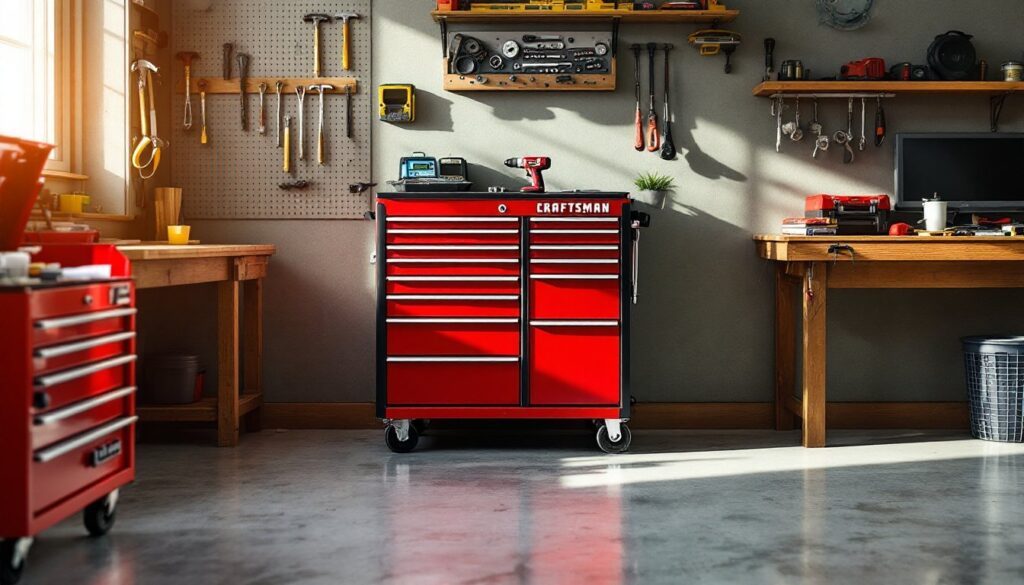
Rolling cabinets represent a serious step up in capacity and cost. Craftsman rolling tool boxes range from compact 26-inch models with four drawers to 56-inch workstation cabinets with integrated power strips and pegboard backs.
Wheel quality matters more than most buyers realize. Craftsman uses 5-inch casters on most rolling models, with at least two locking wheels to prevent movement. Cheaper casters fail under load, especially on uneven garage floors. If you’re storing 300-plus pounds of tools, verify the cabinet’s weight rating and caster load capacity.
Drawer count and depth vary significantly. A typical 41-inch seven-drawer cabinet might include two shallow drawers (3 inches deep) for sockets and bits, four medium drawers (5 to 6 inches) for hand tools, and one deep drawer (10+ inches) for power tools or bulky items. Match drawer configuration to your actual tool collection, extra shallow drawers waste space if you own mostly full-size power tools.
Some Craftsman workstation models include built-in power outlets and USB ports. These features add convenience but require access to a wall outlet, limiting placement options in a workshop. Consider whether you’d rather have integrated power or preserve flexibility in where you position the cabinet.
Top surfaces on rolling cabinets serve as additional work area. Look for models with wood work surfaces if you need a spot for assembly or finishing work. Painted steel tops resist damage but can dent and show scratches. Professional users in automotive shops, as highlighted by hands-on tool reviews, often add rubber mats to protect both tools and the cabinet surface.
How to Choose the Right Craftsman Tool Box Set for Your Workshop
Start by inventorying your current tools. Lay everything out and group by category: hand tools, power tools, fasteners, measuring and marking, finishing supplies. Measure the longest tools, you need drawers deep enough to close without forcing.
Drawer depth requirements for common tools:
- Sockets, wrenches, screwdrivers: 3 to 4 inches
- Hammers, chisels, pliers: 4 to 6 inches
- Drills, sanders, trim routers: 8 to 12 inches
- Circular saws, reciprocating saws: 10+ inches or separate storage
Consider your workspace footprint. Measure available floor space before shopping, accounting for drawer clearance when fully extended. A 56-inch cabinet needs roughly 76 inches of wall space when drawers are open. Factor in aisle width, you need at least 36 inches of clearance to comfortably access drawers while standing.
Mobility needs determine whether you want portable, rolling, or stationary storage. If you work on-site regularly, invest in a quality portable chest and keep a rolling cabinet at home base. Trying to make one solution work for both scenarios usually means compromising on capacity or portability.
Budget considerations go beyond the initial purchase. Factor in drawer liners, dividers, socket organizers, and label makers. A $600 cabinet often requires another $100–150 in organization accessories to function efficiently. Quality foam organizers prevent tools from shifting and make inventory checks faster.
Future expansion matters more than most DIYers anticipate. Tool collections grow. Buy storage with 20-30% extra capacity beyond your current needs, or choose modular systems that allow adding components later. Craftsman’s stackable chest systems and compatible rolling bases support gradual expansion without replacing everything.
Weight capacity often gets overlooked. A drawer rated for 75 pounds might hold that weight, but the slides will wear faster if consistently loaded near maximum. For seasonal homeowner maintenance covered by practical DIY advice, lighter loads work fine. Professional use demands heavier-duty construction and higher weight ratings.
Organizing Your Craftsman Tool Box for Maximum Efficiency
Organize by frequency of use, not by tool category. Your most-grabbed items, tape measure, utility knife, pencil, square, driver bits, belong in the top drawer or compartment where you don’t have to bend or dig. Less frequent tools can occupy lower or deeper drawers.
Shadow foam and custom cut-outs look professional and help maintain organization, but they lock you into a specific layout. If your tool collection changes regularly, adjustable dividers offer more flexibility. Craftsman’s modular divider systems work across multiple drawer sizes within the same product line.
Group tools by project type rather than tool type when it makes sense. Keep all electrical work tools together: wire strippers, voltage tester, fish tape, electrical tape, wire nuts. Same for plumbing: PVC cutter, flux, solder, Teflon tape, wrenches sized for common pipe fittings. This approach reduces time spent gathering tools before starting a job.
Use vertical space inside drawers. Socket rails, bit holders, and wrench racks keep tools upright, doubling usable drawer capacity. Laying everything flat wastes space and creates messy piles that require digging.
Label everything, even if drawers have clear fronts. Use a label maker or paint marker directly on drawer faces. After six months, you won’t remember which of three similar drawers holds your metric sockets versus SAE.
Maintenance items deserve dedicated storage within arm’s reach of your workbench: sandpaper, shop rags, WD-40, thread-locking compound. These aren’t technically tools, but they’re needed on nearly every project. A dedicated shallow drawer prevents hunting through the shop.
Power tool accessories, extra batteries, chargers, blade sets, sanding discs, often end up scattered. Dedicate one deep drawer specifically to cordless tool batteries and chargers. Keep blades and bits in a separate shallow drawer with proper guards to protect cutting edges and your fingers.
Reorganize seasonally. What you need easy access to in spring (lawn equipment tools, outdoor project supplies) differs from winter priorities (interior finishing tools, holiday light repair items). Swap drawer contents rather than fighting against your storage layout.
Conclusion
The right Craftsman tool box set grows with your skills and project ambitions. Focus on construction quality over flashy features, and buy slightly more capacity than you currently need. A well-organized workshop with properly stored tools doesn’t just look better, it makes every project faster and less frustrating. Take the time to set up your storage system correctly from the start, and you’ll spend less time hunting for tools and more time building.