Ants marching through your kitchen can turn a pleasant morning into a frustrating battle. While commercial sprays offer quick knockdown, they often scatter colonies or wear off fast. Boric acid takes a different approach, it’s a slow-acting powder that worker ants carry back to the nest, eliminating the queen and the entire colony from the inside out. This guide walks through everything needed to mix, deploy, and use boric acid ant bait safely and effectively, turning a pantry staple into a powerful pest control tool that costs pennies per application.
Table of Contents
ToggleKey Takeaways
- Boric acid ant killer works by disrupting digestion and damaging exoskeletons over 24–48 hours, allowing worker ants to carry the poison back to the nest and eliminate the entire colony including the queen.
- A homemade boric acid ant bait costs just $5–8 per pound and is more effective and cost-efficient than commercial sprays because it targets the colony source rather than just visible ants.
- Mix boric acid baits at a 1–3% concentration with sugar, water, and optional sweeteners like honey or peanut butter, then place stations 6–12 inches from ant trails along baseboards, under sinks, and near entry points.
- Expect increased ant activity in the first 24–48 hours as workers recruit foragers, but activity should drop sharply after 3–5 days as the colony dies from internal colony-wide poison distribution.
- Store boric acid baits in tamper-resistant containers behind appliances or inside cabinets, wear gloves when mixing, and keep them away from children and pets since ingestion can cause stomach upset and nausea.
What Is Boric Acid and How Does It Kill Ants?
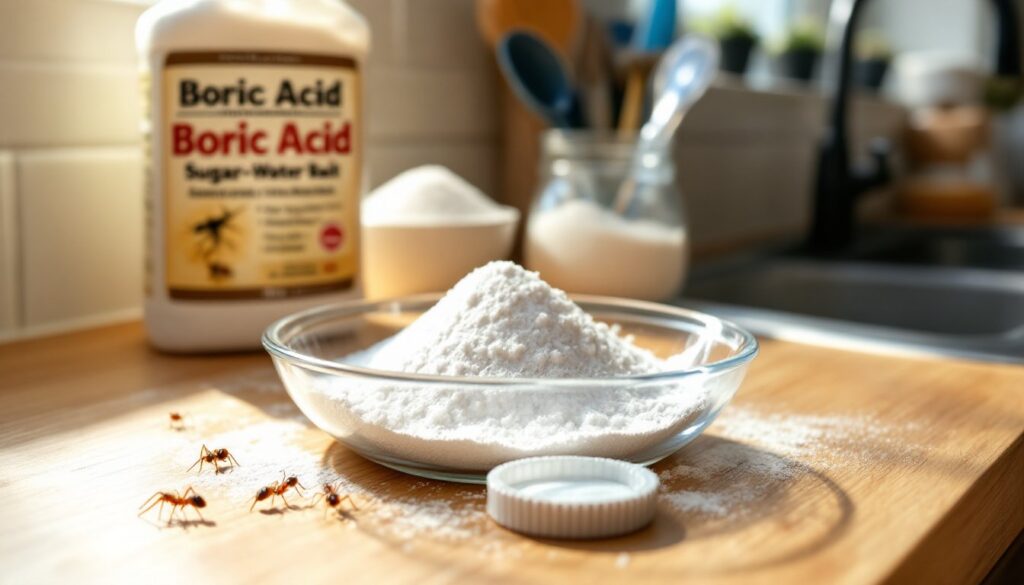
Boric acid is a white, crystalline powder derived from boron, a naturally occurring element. It’s sold in drugstores and hardware stores as an antiseptic, insecticide, and flame retardant. For ants, it acts as a stomach poison: when ingested, it disrupts their digestive systems and damages their exoskeletons through abrasion.
The key to boric acid’s effectiveness is its delayed action. Unlike contact sprays that kill on the spot, boric acid takes 24–48 hours to work. Worker ants consume the bait, carry it back to the nest, and share it with other workers, larvae, and the queen through a process called trophallaxis (social feeding). This colony-wide distribution wipes out the infestation at its source rather than just the foragers visible on your countertop.
Boric acid is most effective against sweet-feeding ant species like Argentine ants, odorous house ants, and pavement ants. Protein-feeding ants (such as carpenter ants during certain seasons) may require protein-based baits mixed with boric acid. The powder itself is relatively low in toxicity to humans and pets when used correctly, sitting at a toxicity level similar to table salt by weight, but it still requires careful handling and placement.
Why Boric Acid Is the Best DIY Ant Control Method
Boric acid stands out among DIY pest control options for several practical reasons. First, it’s inexpensive, a one-pound container costs $5–8 and makes dozens of bait stations. Compare that to commercial bait traps at $10–15 for a four-pack with limited refill options.
Second, it targets the colony, not just the scouts. Sprays and surface treatments kill visible ants but leave the queen and brood untouched, leading to repeated infestations. Top-rated ant killers often use borax or boric acid as their active ingredient for this reason, the chemistry works.
Third, boric acid is stable and long-lasting. Mixed baits stay effective for weeks if kept dry, and the powder itself doesn’t degrade. You can store unused bait in sealed containers for future use without worrying about expiration dates.
Finally, it’s versatile. Boric acid mixes with sugar water, honey, peanut butter, or jelly, letting you adjust the bait to match whatever the ants are currently foraging for. Ant preferences shift seasonally, they favor proteins in spring for brood development and sweets in summer for energy, so being able to tweak your recipe matters.
One limitation: boric acid requires patience. If ants are swarming and you need immediate reduction, a contact spray can knock down the visible population first. Follow up with boric acid bait to finish the job at the nest level.
How to Make Your Own Boric Acid Ant Bait at Home
Mixing boric acid bait at home takes about five minutes and requires ingredients already in most kitchens. The ratio matters: too much boric acid kills ants before they reach the nest, while too little won’t eliminate the colony. Aim for a 1–3% concentration by weight for solid baits and 1–2% for liquids.
Simple Recipe for Solid Boric Acid Ant Traps
Materials needed:
- 1 cup granulated white sugar
- 1 tablespoon boric acid powder (approximately 3% ratio)
- 3 tablespoons warm water
- Small shallow containers (bottle caps, jar lids, or cut-down plastic cups)
Instructions:
- Mix the sugar and boric acid thoroughly in a small bowl. Even distribution prevents clumping.
- Add warm water gradually, stirring until you get a thick paste, similar to wet sand consistency.
- Spoon the paste into shallow containers, filling them about halfway.
- Place the bait stations along ant trails, near entry points, or beside water sources. Ants need moisture, so sinks and bathtubs are prime real estate.
- Replace the bait every 3–4 days or when it dries out completely. Ants ignore desiccated bait.
For outdoor use or areas where moisture is an issue, add a teaspoon of corn syrup to the mix. It keeps the bait pliable longer and adds extra sweetness to lure foragers.
Liquid Boric Acid Bait for Maximum Effectiveness
Liquid baits spread faster through a colony because worker ants can carry larger volumes back to the nest and distribute it more easily through feeding.
Materials needed:
- ½ cup warm water
- ¼ cup granulated sugar
- 1 teaspoon boric acid powder
- Cotton balls or small sponges
- Shallow dishes or jar lids
Instructions:
- Heat the water until warm (not boiling). Hot water dissolves sugar faster but can degrade boric acid’s effectiveness.
- Stir in the sugar until fully dissolved, then add the boric acid. Mix thoroughly, undissolved powder settles to the bottom and creates uneven dosing.
- Soak cotton balls or sponge pieces in the solution and place them in shallow dishes. The cotton provides a drinking surface and prevents ants from drowning.
- Set the bait stations along active ant trails. Refresh the solution every 2–3 days or when the cotton dries out.
- Monitor the stations daily. If ants stop visiting, they may be fed, the colony may be eliminated, or their preference has shifted to protein. Adjust accordingly.
For protein-feeding ants, substitute peanut butter or bacon grease for half the sugar. Heat the fat until liquid, mix in the boric acid, and let it cool into a semi-solid paste. This works well for carpenter ants during their protein-foraging phase in early spring.
Where to Place Boric Acid Ant Baits for Best Results
Placement determines success. Random positioning wastes bait and leaves colonies intact. Start by tracking ant trails, follow them from your countertop back to entry points like cracks in baseboards, gaps around plumbing, or door thresholds.
High-traffic zones:
- Along baseboards in kitchens and bathrooms
- Under sinks and around plumbing penetrations
- Near trash cans and recycling bins
- Behind appliances (refrigerators, stoves, dishwashers)
- Window sills and door frames
Place bait stations within 6–12 inches of the trail but not directly on it. Ants will find nearby bait without you disrupting their established route. Many home improvement resources emphasize observing pest behavior before intervening, it saves time and material.
For exterior applications, position baits near foundation cracks, along concrete expansion joints, beside outdoor trash areas, and at the base of trees or shrubs touching the house. Outdoor bait dries faster, so check it every 1–2 days and refresh as needed.
Avoid these locations:
- Open countertops where children or pets can access them
- Areas exposed to direct sunlight or rain (degrades the bait)
- Spots treated with surface sprays or cleaning chemicals (repels ants)
If you have a severe infestation, deploy multiple bait stations, one every 4–6 feet along active trails. Ants don’t travel far from established routes, so saturating their zone increases contact rates.
Patience pays off. Expect to see increased ant activity for the first 24–48 hours as workers recruit more foragers to the bait. This is normal. Activity should drop sharply after 3–5 days as the colony dies off. If ants ignore the bait, try adjusting the sugar concentration or switching to a protein-based mix.
Safety Tips: Using Boric Acid Around Kids and Pets
Boric acid is safer than many commercial pesticides, but it’s not risk-free. Ingesting large amounts can cause nausea, vomiting, and diarrhea in humans and pets. Proper handling and placement prevent accidental exposure.
Keep bait out of reach:
- Place stations behind appliances, inside cabinets, or under furniture where kids and pets can’t access them.
- Use bait station covers made from inverted plastic containers with small entry holes cut in the sides (¼-inch openings let ants in but exclude curious fingers and paws).
- Tape lids in place or weigh them down to prevent tipping.
Wear basic PPE when mixing:
- Disposable nitrile gloves protect skin from prolonged contact.
- Avoid breathing the powder, it irritates mucous membranes. Work in a ventilated area or outdoors.
- Wash hands thoroughly after handling boric acid or bait stations.
Storage and disposal:
- Store boric acid powder in its original container with the label intact, in a locked cabinet or high shelf.
- Dispose of spent bait stations by sealing them in a plastic bag and placing them in outdoor trash. Don’t compost or flush them.
Pet-specific precautions:
- Cats and small dogs are most at risk due to their size and grooming habits. Even small amounts licked off paws can cause stomach upset.
- If a pet ingests boric acid bait, call your vet or the ASPCA Animal Poison Control Center (888-426-4435). Provide the concentration and estimated amount consumed.
Signs of boric acid poisoning in pets include drooling, vomiting, diarrhea, lethargy, and loss of appetite. In humans, symptoms include stomach pain, nausea, and skin irritation. These typically resolve with supportive care, but medical attention is warranted for significant exposure.
For households with young children or free-roaming pets, consider professional pest control for heavy infestations. Licensed applicators use gel baits in tamper-resistant stations that offer similar colony elimination with tighter safety controls.