Finding furniture that fits a small living room without sacrificing comfort is one of the biggest challenges homeowners face. A compact sectional sofa offers the seating capacity of a full-size sectional while working within tighter square footage, but not all sectionals labeled “compact” are created equal. Understanding dimensions, configurations, and layout strategies helps buyers avoid the frustration of cramming an oversized piece into a space that can’t handle it. This guide walks through what defines a compact sectional, how to measure accurately, and how to choose a configuration that maximizes both function and flow.
Table of Contents
ToggleKey Takeaways
- A compact sectional sofa typically measures 80–100 inches on its longest side and fits rooms between 150–250 square feet, making it ideal for small living spaces without sacrificing seating capacity.
- Accurate measurement of your space—including doorways, ceiling height, and HVAC clearance—is essential before purchasing a compact sectional to avoid delivery complications and ensure proper functionality.
- L-shaped and chaise configurations serve different room layouts; L-shaped sectionals work best in square rooms while chaise sectionals maximize seating in rectangular or open-concept spaces.
- Modular and reversible compact sectional designs allow easy rearrangement and adaptation to different rooms, simplifying both moves and layout changes.
- Frame quality (kiln-dried hardwood with corner blocks), performance fabrics rated 30,000+ double rubs, and high-density foam (1.8 lb/ft³ or higher) determine a compact sectional’s durability and long-term value.
- Floating a compact sectional 12–18 inches from walls or positioning it to face natural focal points like fireplaces creates better traffic flow and maximizes visual space in small rooms.
What Makes a Sectional Sofa Compact?
A compact sectional typically measures 80 to 100 inches along its longest side, compared to standard sectionals that can stretch beyond 120 inches. The term “compact” refers to overall footprint rather than individual seat depth or cushion thickness. Most compact models feature two to four seating positions and avoid bulky armrests or deep chaise extensions that consume extra floor space.
Key characteristics include:
- Shallow or track arms instead of rolled or pillow arms (saves 4-6 inches per side)
- Modular or reversible chaise sections that adapt to room layout
- Leg height of 4-8 inches, which creates visual space underneath and makes the piece feel lighter
- Single-piece or two-piece construction (easier to maneuver through narrow doorways and hallways)
Some manufacturers use nominal sizing similar to lumber dimensions, advertising a “90-inch sectional” that actually measures 94 inches corner to corner once you account for arm thickness and seam allowances. Always request the full assembled dimensions including depth and height, not just the advertised length.
Compact sectionals work best in rooms between 150 and 250 square feet. Below that threshold, a loveseat or apartment sofa often provides better proportion. Above 250 square feet, a standard sectional or modular system usually offers more seating without the layout compromises compact models require.
Top Benefits of Choosing a Compact Sectional
Compact sectionals deliver more seating per square foot than traditional sofa-and-chair arrangements. A typical 85-inch L-shaped compact sectional seats four adults comfortably, whereas a standard three-seat sofa plus accent chair occupies similar floor space but seats only three to four with less flexibility.
Space efficiency is the primary advantage. Corner placement allows the sectional to hug two walls, freeing up the room’s center for traffic flow or a coffee table. This configuration works especially well in open-concept layouts where furniture needs to define zones without blocking sightlines.
Versatility in layout ranks second. Most compact sectionals ship as two or three separate pieces, a corner unit, an armless chair, and a chaise or loveseat section. Homeowners can rearrange modules to fit different rooms or orientations without buying new furniture. This modularity also simplifies moving: individual pieces fit through standard 32-inch doorways more easily than a single 90-inch frame.
Many small space living ideas emphasize dual-purpose furniture, and compact sectionals often include built-in storage under chaise sections or sleeper mechanisms that convert seating into a guest bed. Models with storage typically sacrifice 2-3 inches of seat depth, so test for comfort if buyers plan to use the sofa daily.
Cost savings compared to custom-built seating or multiple standalone pieces make compact sectionals attractive for first-time homeowners or renters. Mid-range models with durable upholstery and hardwood frames run $800 to $2,000, depending on region and fabric grade, roughly comparable to a quality sofa-and-loveseat set but with better spatial efficiency.
How to Measure Your Space for a Compact Sectional
Start by measuring the room’s usable floor space, not just wall-to-wall dimensions. Subtract 36 inches from walkways and doorways to maintain comfortable traffic flow. Interior designers typically recommend leaving 18 to 24 inches between the sofa edge and any coffee table, and 30 to 36 inches between the sectional and the TV stand or entertainment center.
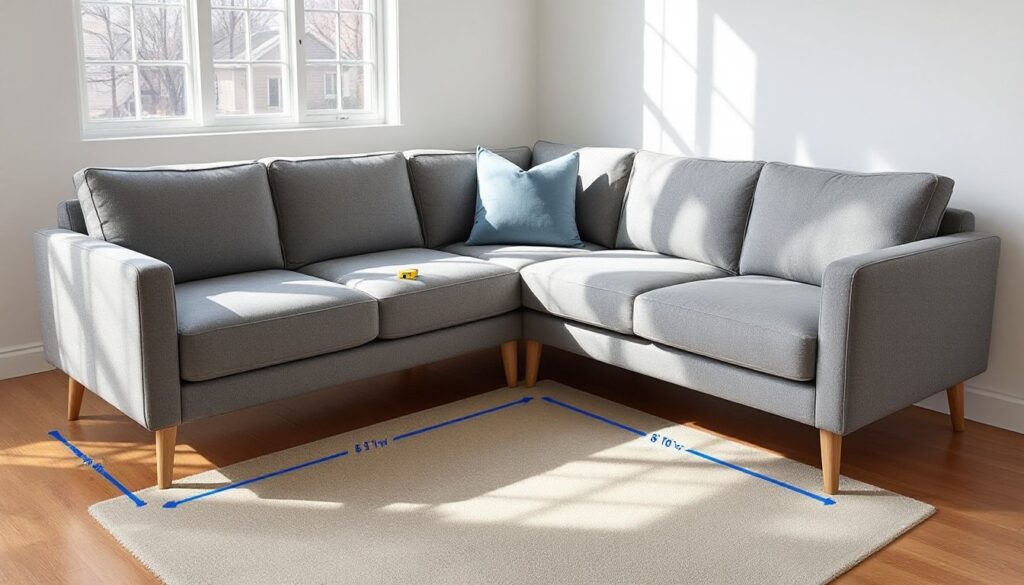
Use painter’s tape or masking tape to outline the sectional’s footprint on the floor. Include the full depth measurement, most compact sectionals range from 32 to 38 inches deep, but chaise sections can extend 50 to 60 inches into the room. Walk around the taped outline to confirm clearance for doors, windows, heating vents, and electrical outlets. Blocking a floor register with a sofa back creates cold spots and forces HVAC systems to work harder.
Ceiling height and scale matter more than many buyers expect. In rooms with 8-foot ceilings, a low-profile sectional with a 30 to 32-inch back height keeps proportions balanced. Higher-backed models (36+ inches) work better in rooms with 9- or 10-foot ceilings but can make low-ceilinged spaces feel cramped.
Measure doorways, stairwells, and hallways along the delivery path. Most compact sectionals disassemble into pieces no wider than 38 inches and no taller than 32 inches, but confirm dimensions with the retailer before purchase. If the home has a tight turn at the top of a staircase or a narrow hallway leading to the living room, modularity becomes critical. Some manufacturers offer models with removable legs or collapsible backs specifically for challenging delivery routes.
Finally, account for reclining mechanisms or adjustable headrests if the sectional includes them. Recliners need 8 to 12 inches of clearance behind the backrest to extend fully. Placing a reclining sectional tight against a wall defeats the purpose and risks damaging drywall.
Best Compact Sectional Configurations for Small Spaces
Configuration choice depends on room shape, entry points, and how the space gets used. The two most popular options, L-shaped and chaise sectionals, serve different needs.
L-Shaped vs. Chaise Compact Sectionals
L-shaped sectionals feature two equal-length arms meeting at a 90-degree corner. Total footprint typically measures 80 x 80 inches to 95 x 95 inches. This symmetrical design works well in square rooms or when the sectional needs to anchor a corner without extending too far into the room’s center. L-shaped models usually seat three to four and provide balanced armrest support on both ends, useful if the sectional serves as a primary gathering spot for multiple users.
The corner seat on an L-shaped sectional can feel cramped for taller individuals. Some models include a corner wedge with extra depth, but this adds 4-6 inches to the overall footprint.
Chaise sectionals pair a standard two- or three-seat sofa with an extended lounge section. The chaise typically measures 55 to 65 inches long and 30 to 35 inches wide, creating an asymmetrical footprint. This configuration suits rectangular rooms where one side of the sectional runs along a longer wall. The chaise provides full-leg support for lounging but accommodates only one person comfortably, making it less practical for households that regularly host multiple guests.
Reversible chaise models allow buyers to swap the chaise from left to right without tools, adapting to room layout changes or future moves. This flexibility adds $100 to $300 to the price but eliminates the risk of ordering the wrong orientation.
For rooms narrower than 12 feet, an L-shaped sectional with equal 75-inch sides usually maintains better proportion. In rooms wider than 12 feet or with an open-concept flow into a dining area, a chaise sectional running parallel to the longest wall maximizes seating without obstructing sightlines. Many designer profiles showcase chaise sectionals in open layouts where defining distinct living zones matters more than pure seating capacity.
Material and Style Considerations for Compact Sectionals
Frame construction determines longevity. Look for kiln-dried hardwood frames (oak, maple, or birch) with corner blocks and double-dowel joinery. Budget models often use softwood or engineered lumber, which sags faster under repeated use. Lift the sectional’s front edge, if the frame feels light (under 70 pounds for a loveseat section), it likely uses lower-grade materials.
Upholstery fabric affects both durability and maintenance. Performance fabrics (polyester blends treated with stain-resistant coatings) handle spills and pet hair better than natural fibers but can feel less breathable in humid climates. Leather and faux leather wipe clean easily but show wear patterns faster on high-contact areas like armrests and seat edges. For households with kids or pets, fabrics rated 30,000+ double rubs (Wyzenbeek abrasion test) provide adequate durability.
Cushion fill impacts comfort and maintenance. High-density foam (1.8 lb/ft³ or higher) holds its shape longer than low-density or polyester batting. Many mid-range compact sectionals use a foam core wrapped in fiber batting, balancing support with a softer initial feel. Down-filled cushions require regular fluffing but offer a plush, sink-in feel: they’re less practical for sectionals that see daily use.
Leg style and finish alter visual weight. Exposed wood or metal legs in tapered or hairpin designs make the sectional feel lighter and simplify vacuuming underneath. Skirted bases or block legs create a heavier, more traditional look but trap dust and pet hair.
Compact sectionals work with most decor styles if the upholstery and leg finish match existing furniture. Mid-century modern designs favor tapered wood legs and tufted backs. Contemporary styles lean toward track arms, low profiles, and neutral tones. Transitional models split the difference with rolled arms and mixed materials. For homeowners interested in budget home renovation stories, reupholstering a used compact sectional often costs $600 to $1,200, less than buying new but still a significant investment.
Placement and Layout Tips to Maximize Your Space
Corner placement is the default for compact sectionals, but it’s not always optimal. Floating the sectional away from walls by 12 to 18 inches creates a walkway behind the sofa, useful in open-concept homes where the living area transitions into a dining or kitchen zone. This layout also allows for a console table behind the sofa, adding storage and display space without consuming additional square footage.
In narrow rooms (10 feet wide or less), position the sectional’s longer side parallel to the longest wall and leave the chaise or short arm extending into the room. This orientation maintains a clear path along one wall for doorways or windows. Avoid centering a compact sectional in a narrow room, it chokes off circulation and makes the space feel smaller.
Lighting and focal points influence placement. If the room has a fireplace or large window as a focal point, angle the sectional to face it rather than forcing a strict corner alignment. Many homeowners default to centering furniture on the TV, but this often creates awkward gaps or forces seating too far from conversation areas. Prioritize traffic flow and natural light over screen placement.
Use an area rug to anchor the sectional and define the seating zone. The rug should extend 12 to 18 inches beyond the sofa’s front edge and ideally sit under all front legs. In small spaces, a rug that’s too small makes the sectional look disconnected from the rest of the room. Standard sizes for compact sectional layouts are 8 x 10 feet or 9 x 12 feet, depending on room dimensions.
Avoid pushing the sectional flush against radiators, floor vents, or return-air grilles. Blocked airflow reduces HVAC efficiency and can cause localized temperature imbalances. Leave at least 6 inches of clearance around heating and cooling elements.
For rooms with multiple entry points, keep at least one pathway 36 inches wide clear of furniture. In practice, this often means placing the sectional’s back toward a low-traffic wall and orienting the chaise or short arm toward the room’s interior. Test the layout by walking through the space as if carrying a laundry basket or grocery bags, if the path feels cramped during the test, it’ll feel cramped in daily use.