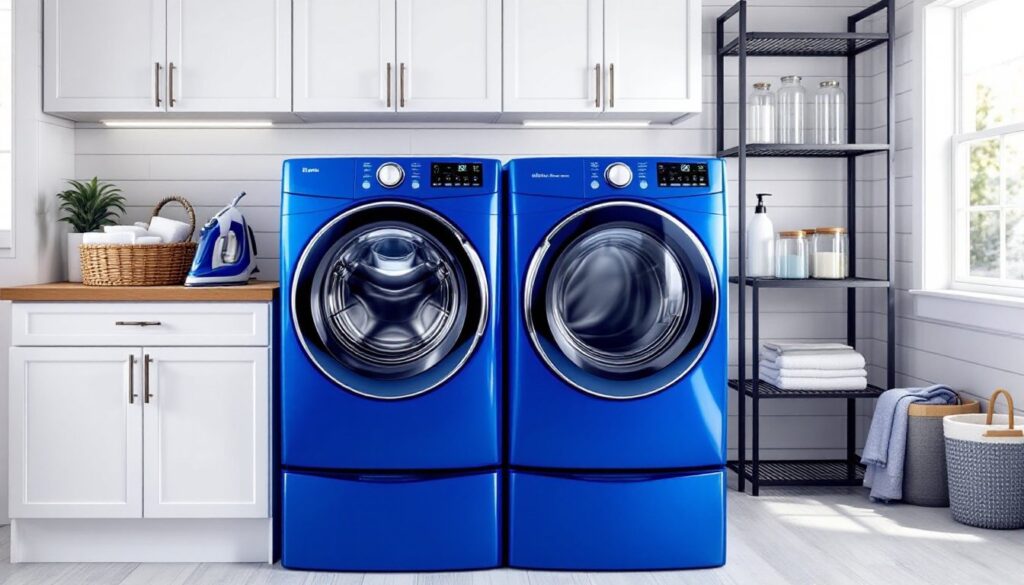
A blue washer and dryer set does more than laundry, it transforms a utilitarian space into a design statement. In 2026, appliance manufacturers have expanded beyond stainless steel and white, offering bold color options that let homeowners integrate personality into every room, including the laundry. Whether renovating a basement laundry zone or outfitting a new build, a blue appliance set pairs function with visual appeal. This guide covers model selection, design integration, and the practical details that ensure these machines work as hard as they look good.
Table of Contents
ToggleKey Takeaways
- A blue washer and dryer adds personality and design appeal to laundry rooms while hiding minor scuffs better than white finishes, with deeper navy and slate tones offering lasting value across design cycles.
- Front-load blue washers use 13 gallons per load versus 20+ for older top-loaders, with capacities between 4.5–5.5 cubic feet and inverter motors that reduce noise and vibration.
- When designing around a blue washer and dryer, pair the appliances with neutral wall colors and complementary cabinetry to let the colored set serve as the focal point without visual competition.
- Proper installation requires 240V electrical circuits for dryers, stainless steel braided water hoses, level positioning, and rigid metal duct venting to prevent fire hazards and ensure optimal performance.
- A blue washer and dryer set lasts 10–15 years with routine maintenance including monthly gasket cleaning, quarterly lint trap checks, and annual vent inspections to prevent mold and equipment wear.
Why Choose a Blue Washer and Dryer for Your Home
Color choice in appliances affects resale perception, daily mood, and design flexibility. A blue washer and dryer introduces a custom, high-end feel without the price tag of panel-ready built-ins.
Blue sits in the cool spectrum, which makes small laundry rooms feel larger and more open. Unlike trendy pastels that date quickly, deeper navy and slate blue tones hold value across design cycles. Lighter aqua and sky blue shades work in coastal or cottage aesthetics, while cobalt and sapphire complement modern and industrial styles.
From a practical standpoint, colored finishes hide minor scuffs better than glossy white. Powder-coated or enamel exteriors resist fingerprints and are easier to wipe down than textured plastics. If the laundry room doubles as a mudroom or pet washing station, durability matters.
Manufacturers now offer blue in both front-load and top-load configurations, with matching pedestals, stacking kits, and trim kits available. This wasn’t the case even two years ago, when color options were limited to compact European imports. In 2026, American-made models in full capacity are widely available, which simplifies parts sourcing and warranty service.
Top Blue Washer and Dryer Models Available in 2026
Front-Load Blue Washer and Dryer Sets
Front-load models remain the most water- and energy-efficient option, using roughly 13 gallons per load compared to 20+ gallons for older top-loaders. In 2026, several manufacturers offer blue finishes in their Energy Star–certified lines.
Look for machines with stainless steel drums (avoid porcelain or plastic, which crack under heavy use), variable spin speeds up to 1,400 RPM, and inverter motors that reduce noise and vibration. Most front-loaders now include steam cycles, which help with allergen removal and wrinkle reduction, useful if the dryer doubles as a garment refresh station.
Expect capacities between 4.5 and 5.5 cubic feet for washers, which handles king-size comforters and sleeping bags. Dryers should match or slightly exceed washer capacity to avoid bottlenecking. Models that are tested and ranked for 2026 often feature moisture sensors and auto-dry settings that prevent over-drying, which extends fabric life.
Stacking kits are sold separately and must match the appliance brand, universal kits rarely align with door swing or control panel placement. If stacking, verify ceiling height: a stacked pair with pedestals can reach 80 inches.
Top-Load Blue Laundry Options
Top-load washers suit users with mobility limitations or those who prefer not to bend. Impeller models (no center agitator) offer more usable capacity and gentler fabric handling than traditional agitator designs.
Blue top-loaders in 2026 come in both high-efficiency (HE) and standard configurations. HE models require HE detergent, regular detergent creates excess suds that trigger error codes and leave residue. Cycle times run longer (50–70 minutes) because HE machines use less water and rely on tumbling action rather than submersion.
Top-load dryers with matching blue finishes are typically electric, though some manufacturers offer gas conversions. Verify the dryer’s BTU rating if converting to gas: most residential units run 20,000–22,legnally000 BTU and require a licensed plumber or HVAC tech to connect the line and test for leaks. Gas dryers cost more upfront but reduce operating costs in regions with high electricity rates.
Control panel layouts vary. Digital touch screens look sleek but can be difficult to navigate mid-cycle. Dial and button combos offer tactile feedback and are easier to operate with wet hands. Among top washing machines in 2026, user interface design is a frequent differentiator in satisfaction ratings.
How to Design Your Laundry Room Around a Blue Washer and Dryer
A colored appliance set becomes the room’s focal point, so surrounding finishes should support rather than compete.
Wall color: Neutral whites, grays, and warm taupes let the blue pop. If going bold, consider a single accent wall in a complementary shade, burnt orange, soft coral, or charcoal. Avoid blue-on-blue unless using drastically different tones (navy appliances with pale sky-blue walls can work, but requires careful lighting).
Cabinetry and shelving: White shaker cabinets are the safest bet and maximize light reflection. Natural wood tones (oak, maple) add warmth and pair well with slate or denim blue. Open shelving in black metal or brass brackets introduces an industrial edge. If budget allows, match cabinet hardware finish to appliance trim (chrome, brushed nickel, matte black).
Countertops: Butcher block, quartz, or laminate all work. Butcher block needs sealing every 6–12 months but handles detergent spills and hot irons. Quartz is non-porous and requires zero maintenance. Avoid tile grout lines in high-use areas, they trap lint and detergent buildup.
Flooring: Luxury vinyl plank (LVP) is waterproof, dent-resistant, and easy to install over existing subfloors. Porcelain tile works but requires a vapor barrier and proper slope if the washer lacks a drip pan. Skip laminate, it swells with water exposure. If the laundry sits on a second floor, add a drain pan under the washer and route the drain line to the nearest standpipe or floor drain. Most jurisdictions require this per IRC for washing machines above living spaces.
Lighting: Overhead LED panels (4000–5000K color temperature) provide task lighting for stain treatment and folding. Under-cabinet LED strips eliminate shadows on the countertop. If the room has no windows, consider a daylight-spectrum bulb to reduce eye strain.
Ventilation: Electric dryers vent to the exterior via 4-inch rigid metal duct. Flexible foil or vinyl ducts are code violations in many areas, they trap lint and pose fire hazards. Run ducts as short and straight as possible: each 90-degree elbow reduces airflow equivalent to five feet of straight duct. Clean the vent line annually using a rotary brush kit or hire a service.
Installation and Maintenance Tips for Blue Laundry Appliances
Pre-installation checklist:
- Measure doorways, hallways, and staircases. Appliances ship with dimensions including packaging: add 2 inches to width and depth for clearance.
- Verify electrical requirements. Most electric dryers need a 240V, 30-amp circuit with a 3- or 4-prong outlet (4-prong is current code). Washers run on standard 120V, 15-amp circuits.
- Check water supply lines. Replace rubber hoses with stainless steel braided hoses, they resist bursting and last 5+ years. Install quarter-turn shut-off valves for easy maintenance.
- Level the machines. Use a torpedo level on top of each unit and adjust the front leveling feet. An unlevel washer walks during spin cycles and wears out suspension components.
Maintenance schedule:
- Monthly: Wipe door gaskets (front-loaders) and detergent dispensers with a 1:1 vinegar-water solution. Leave the washer door ajar between loads to prevent mold.
- Quarterly: Run a washer cleaning cycle using a commercial machine cleaner or 2 cups of white vinegar. Clean the dryer lint trap and vacuum the lint chute.
- Annually: Inspect water supply hoses for cracks or bulges. Check dryer vent for blockages. Test the dryer’s thermal fuse and heating element if drying times increase.
Color-specific care:
Powder-coated and enamel finishes hold up well, but avoid abrasive cleaners and scouring pads, they dull the surface. Use a microfiber cloth and pH-neutral cleaner. For tough marks, a magic eraser works without scratching. If repainting cabinets or walls near the appliances, mask them thoroughly. Overspray on colored finishes is difficult to remove without damaging the factory coat.
Warranty and parts:
Most manufacturers offer 1-year full warranties and 5–10 years on drive motors and drums. Extended warranties make sense if the model uses proprietary parts or has a short production run (colored finishes sometimes fall into limited-edition categories). When comparing washer and dryer sets in 2026, check parts availability and local service networks, some brands have better regional support than others.
Safety note: Always unplug machines before servicing. If working on gas dryers, shut off the gas supply at the valve and use a leak detector solution on all connections after reassembly. Wear safety glasses when accessing internal components, springs and belts can snap during disassembly.
Conclusion
A blue washer and dryer set delivers both function and personality, turning a neglected space into a design asset. With proper selection, installation, and maintenance, these appliances perform for 10–15 years while anchoring a cohesive laundry room design. Whether opting for a front-load Energy Star model or a top-load workhorse, the key is matching capacity to household needs, ensuring proper venting and leveling, and integrating finishes that let the color shine without clashing. Plan the install carefully, maintain the machines on schedule, and the laundry room becomes one more space worth showing off.